DNS Security and Infrastructure Guide
The Domain Name System (DNS) is one of the most critical components of the Internet and a central element of modern cybersecurity infrastructure.
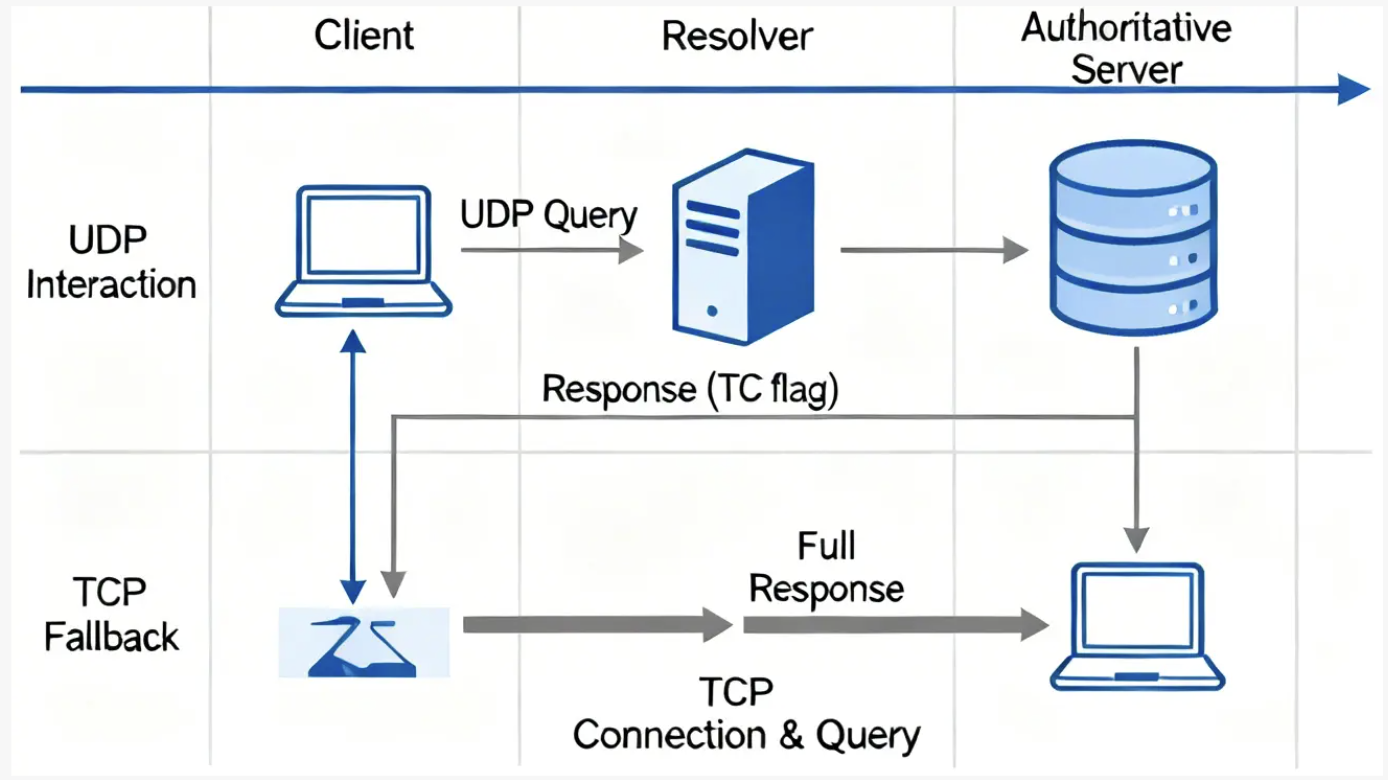
The Domain Name System (DNS) is one of the most critical components of the Internet and a central element of modern cybersecurity infrastructure.
This guide explains how DNS works, how DNS security technologies protect the Internet, and how modern DNS infrastructures operate at scale. The topics below are organized into learning sections covering DNS fundamentals, DNSSEC security mechanisms, encrypted DNS protocols, Protective DNS filtering, and large-scale DNS operations.
Together these articles form a comprehensive DNS knowledge base covering DNS resolution, DNS security mechanisms such as DNSSEC, encrypted DNS protocols (DoT, DoH, DoQ), and modern Protective DNS architectures used to block malware domains and command-and-control infrastructure.
Because every Internet connection begins with a DNS lookup, attackers frequently use domain infrastructure in cyberattacks. Malware campaigns rely on DNS to distribute payloads, phishing campaigns host fraudulent domains, and botnets use domain names to locate command-and-control servers.
Modern DNS security platforms detect and block these threats using technologies such as DNSSEC validation, DNS firewalls, and Protective DNS filtering based on threat intelligence feeds.
Many modern malware campaigns rely heavily on DNS infrastructure to distribute malicious payloads and communicate with command-and-control servers.
Learn the basic concepts behind DNS resolution and how domain names are translated into IP addresses.
DNSSEC protects DNS responses from manipulation and prevents cache poisoning attacks using cryptographic signatures.
Modern DNS protocols encrypt DNS traffic to protect user privacy and prevent network interception.
Protective DNS technologies block malicious domains and prevent connections to malware infrastructure, phishing sites, and botnet command-and-control servers.
Operating DNS infrastructures at scale requires distributed architectures, telemetry, monitoring and high-performance resolvers.
Internet of Things (IoT) devices generate large volumes of DNS traffic. Understanding IoT DNS behavior helps operators distinguish legitimate device telemetry from malware activity and botnet infections.
Common architectural and operational questions for managing high-throughput DNS infrastructure.
Planisys develops and operates large-scale DNS infrastructures and Protective DNS platforms used by enterprises, governments and Internet service providers to protect networks against cyber threats.
Learn more about the Planisys DNS Firewall platform.